Work
About
Contact
Work
About
Contact
Alasdair Hall

Design Trends 2025

A Design trends deck created and presented to the FGF and Wonderbrands Sales and Marketing teams, to inform and inspire them while doing 2026 Brand planning.
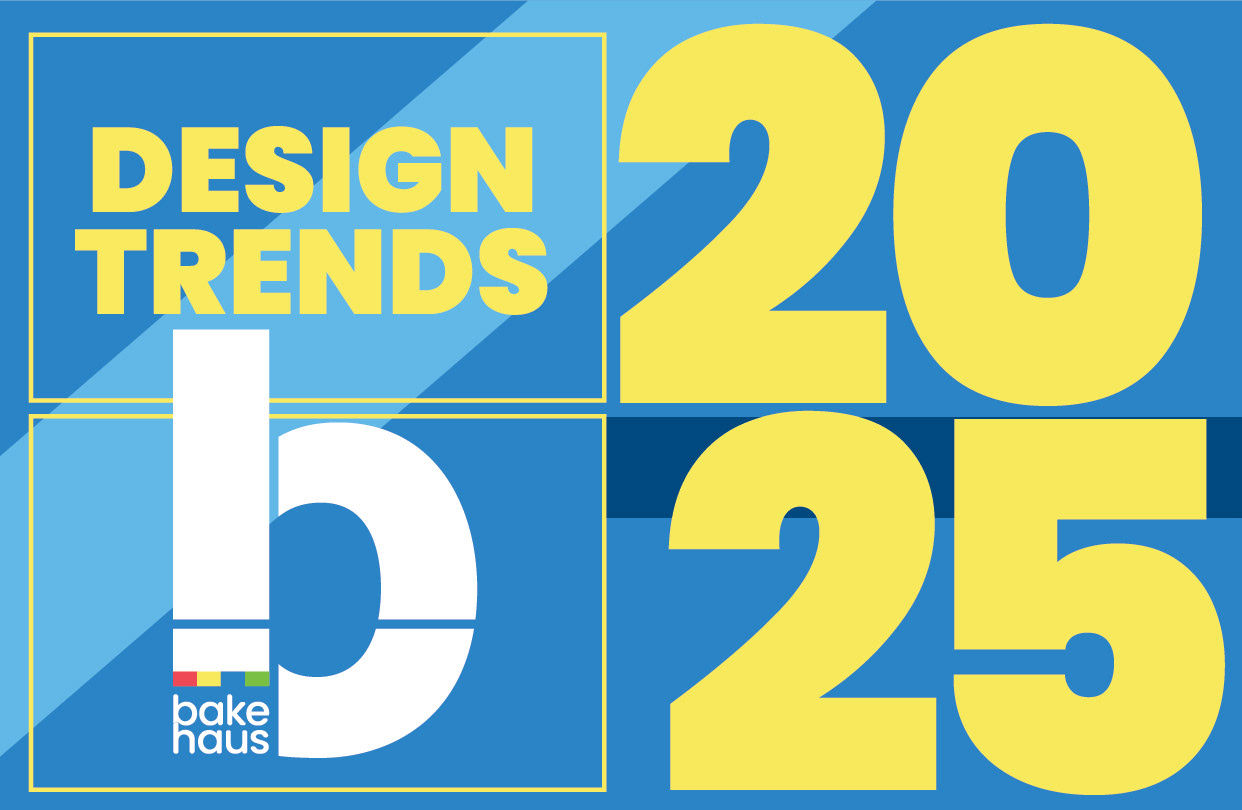
Design Trends 2025 — Bakehaus Creative Presentation  Opening slide introducing a 2025 design trends presentation developed for the Bakehaus creative team.  The design features oversized yellow typography spelling out "2025," arranged in a bold geometric composition against layered blue backgrounds. The words "Design Trends" appear in a yellow outlined square, while a large white lowercase "b" and the multicoloured Bakehaus logo anchor the bottom-left corner.  The presentation establishes a bright, graphic visual language using bold typography, strong colour contrast and geometric shapes.
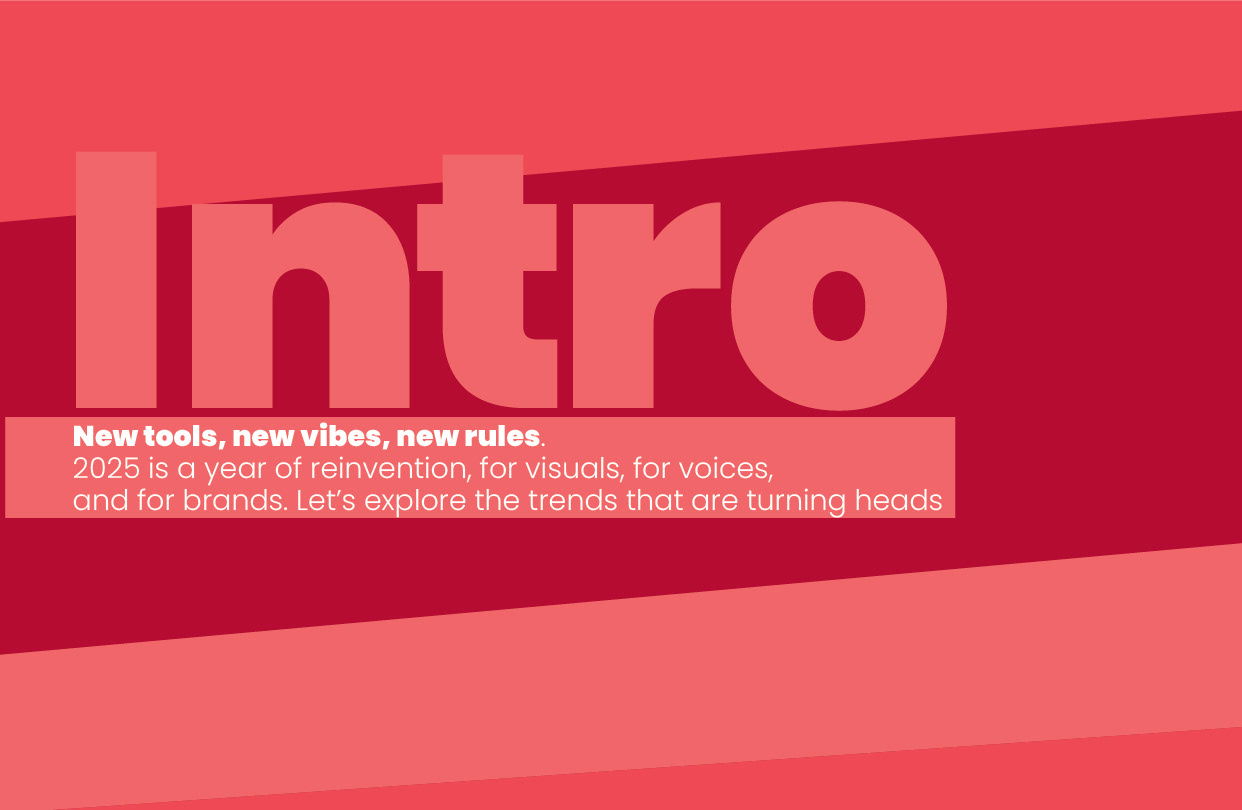
Introduction — New Tools, New Vibes, New Rules  The presentation introduces 2025 as a year of reinvention across visual design, brand communication and creative technology.  Under the headline "New tools, new vibes, new rules," the introduction establishes the central theme: exploring the trends influencing how brands communicate, how designers create and how visual identities evolve.  The slide frames the presentation as an opportunity to examine emerging creative directions and consider their relevance to contemporary brand design.
Macro Themes — The Forces Shaping Design  Section divider introducing the broad cultural, technological and environmental forces influencing design in 2025.  The slide uses oversized typography reading "Macro Themes," establishing the transition from the presentation introduction into an exploration of larger industry shifts.  The following section examines artificial intelligence, sustainability, digital nostalgia and hyper-personalization.
The Rise of AI — Artificial Intelligence as a Creative Collaborator  An exploration of how generative artificial intelligence is reshaping the creative process in 2025.  The presentation positions AI as a collaborative tool that enables designers to prototype, iterate and experiment more efficiently, rather than simply replacing human creativity.  Emerging visual aesthetics associated with generative AI include surreal imagery, fluid forms, unexpected compositions and intentionally imperfect digital textures.  The slide features a collage of AI-influenced creative examples, including surreal landscapes, futuristic architecture, conceptual fashion imagery, colourful digital environments and experimental advertising.  A blue geometric background supports the imagery, reinforcing the presentation's contemporary visual identity.
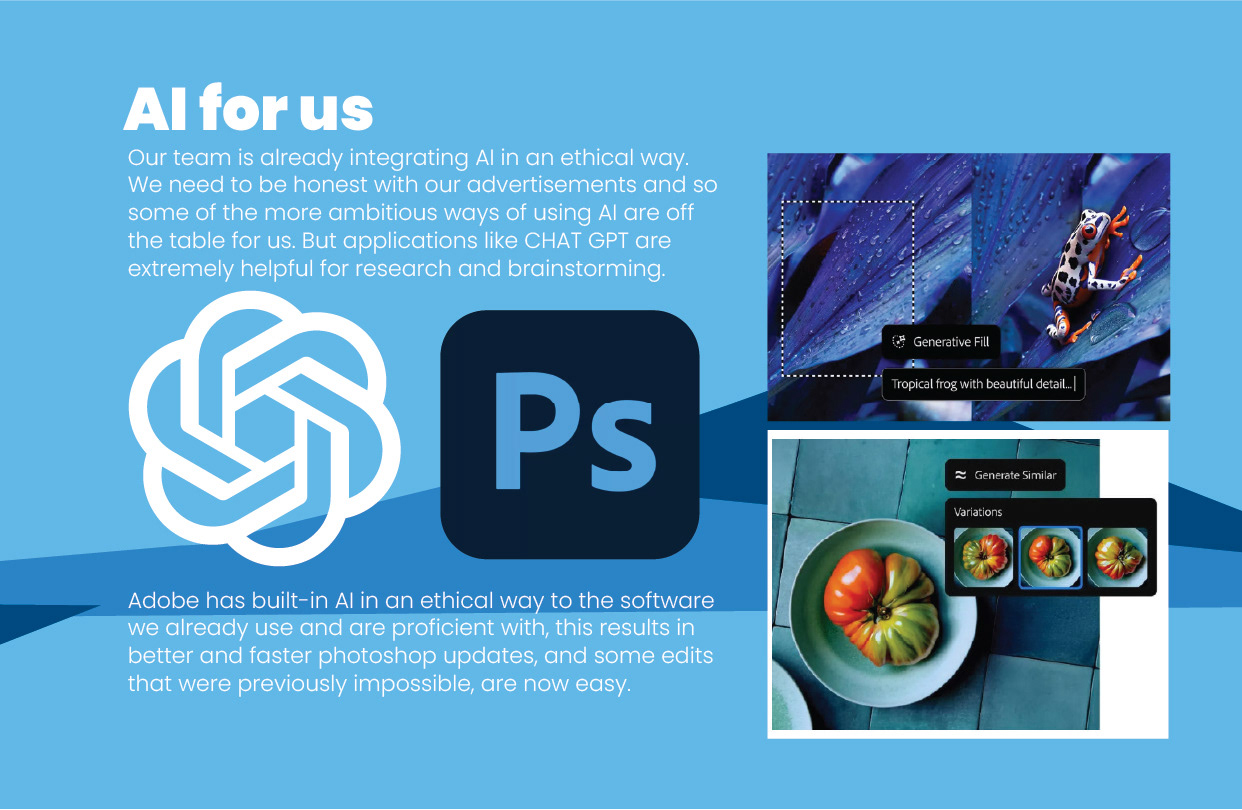
AI for Us — Practical Applications for Bakehaus  An examination of how artificial intelligence can be integrated into the Bakehaus creative workflow while maintaining ethical standards and responsible advertising practices.  The presentation acknowledges the importance of accurately representing products in consumer advertising, limiting some applications of generative imagery.  Instead, the focus is placed on practical tools that support research, brainstorming, image editing and creative production.  The slide features the ChatGPT and Adobe Photoshop logos alongside examples of Adobe's generative editing capabilities, including Generative Fill and Generative Similar.  The visual examples demonstrate how AI-assisted tools can simplify complex Photoshop tasks, accelerate production and enable image modifications that were previously difficult to achieve.
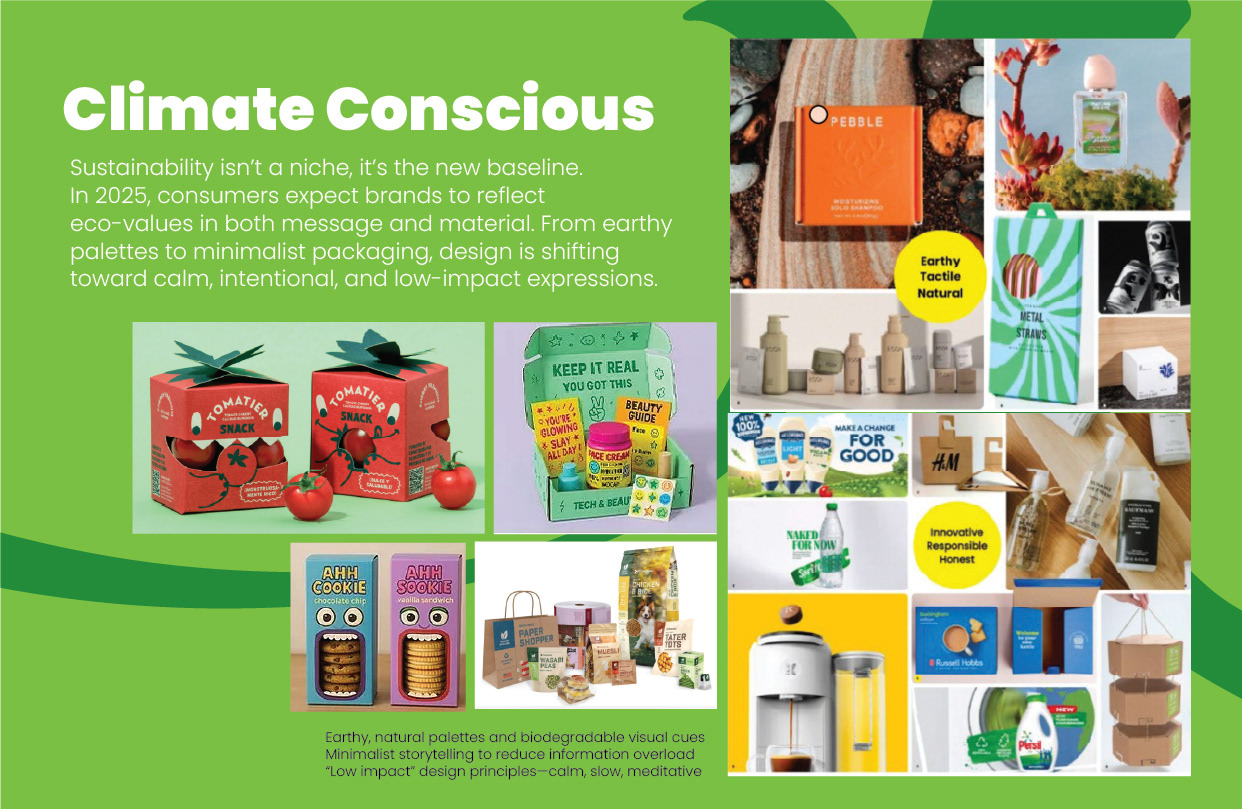
Climate Conscious — Sustainability in Contemporary Design  An exploration of sustainability as an increasingly important consideration in brand identity and packaging design.  The presentation examines how environmentally conscious design is reflected through natural colour palettes, restrained visual communication, biodegradable material cues and lower-impact packaging approaches.  The slide features a collection of contemporary packaging examples, including food products, beverages, personal care items and sustainable household goods.  Earthy greens, warm neutrals, paper textures, botanical illustrations and simplified layouts appear throughout the examples.  The visual research highlights how brands use design to communicate environmental responsibility, natural ingredients and thoughtful consumption.
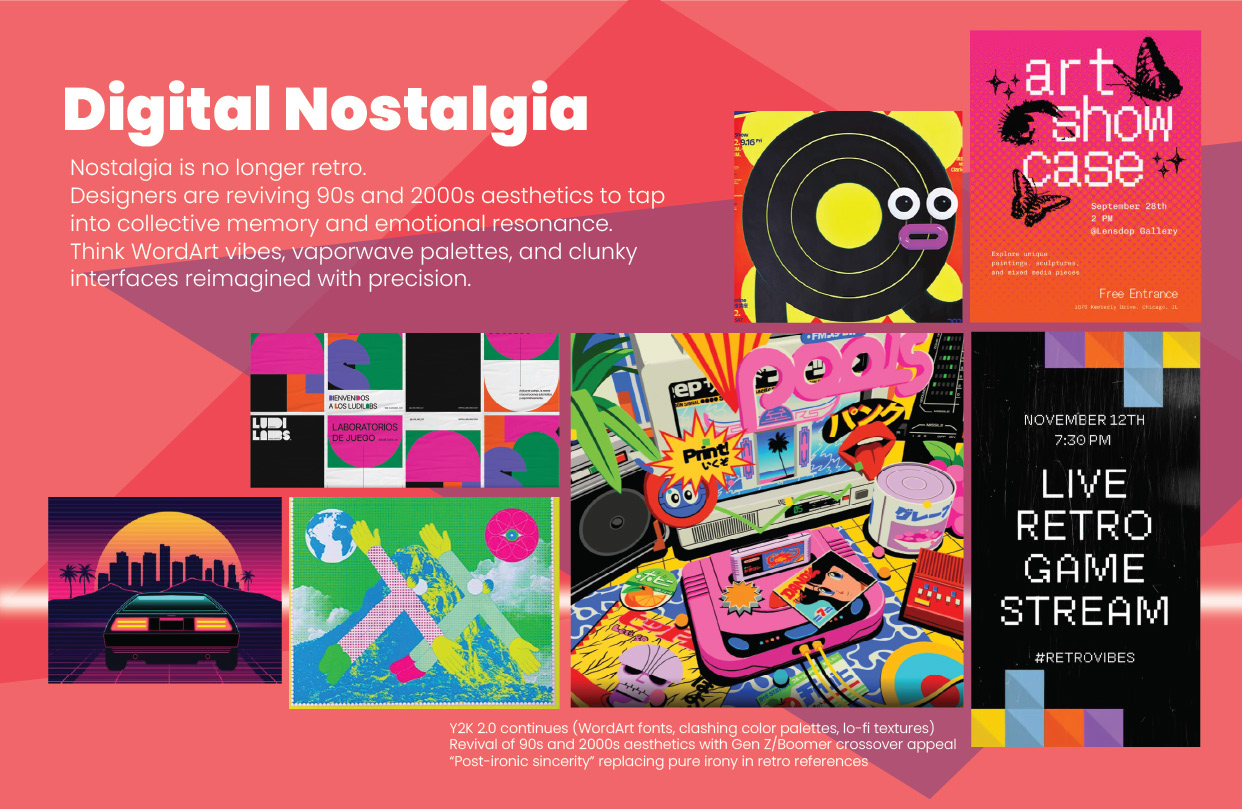
Digital Nostalgia — The Revival of 1990s and 2000s Aesthetics  An exploration of the renewed popularity of visual styles associated with early digital culture.  The presentation examines the return of Y2K-inspired typography, saturated colour palettes, lo-fi textures, pixel graphics and deliberately unconventional layouts.  The trend reflects how designers reinterpret familiar visual references from the 1990s and 2000s for contemporary audiences.  The slide presents a colourful collage of retro-inspired creative examples, including pixelated typography, vaporwave landscapes, arcade graphics, illustrated electronics and experimental poster designs.  A vibrant pink and coral background reinforces the energetic, nostalgic visual language.
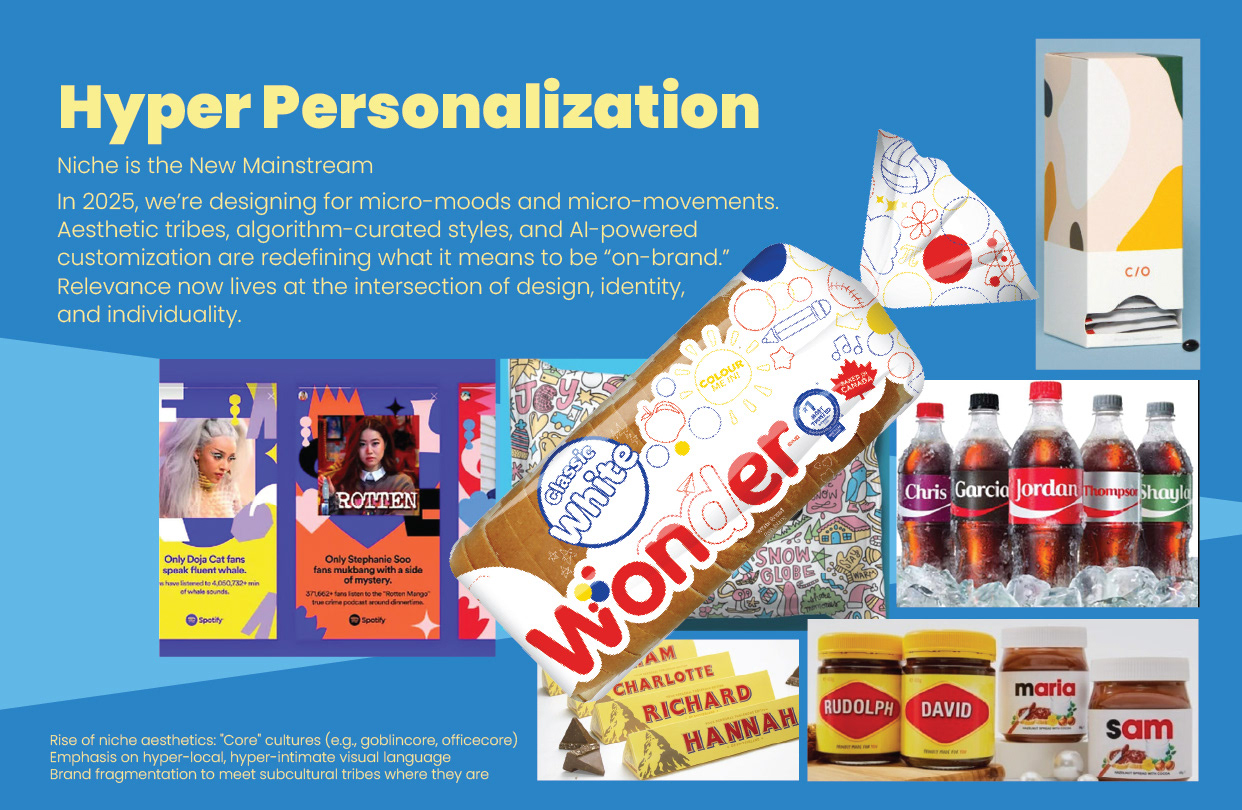
Hyper Personalization — Niche Is the New Mainstream  An exploration of how brands are adapting their visual identities to increasingly specific audiences, communities and cultural interests.  The presentation examines the influence of micro-aesthetics, algorithm-driven personalization and identity-based design, suggesting that brands can create stronger connections by responding to individual tastes and subcultures.  The slide features examples of personalized and audience-specific branding, including customized Coca-Cola bottles, individualized food packaging, music platform communications and Wonder-branded packaging.  These examples demonstrate how established visual identities can accommodate customization while remaining recognizable.  The overall composition uses a bright blue background with yellow typography and overlapping product imagery.
Visual Styles — Emerging Creative Aesthetics  Section divider introducing the visual design styles explored in the presentation.  The slide features the heading "Visual Styles" and marks the transition from broad industry trends into specific creative techniques and aesthetics.  The following section examines typographic boldness, fluid motion, maximalism and realism.
Typographic Boldness — Type as the Hero  An exploration of typography as a dominant visual element in contemporary graphic design.  The presentation highlights oversized lettering, expressive serif typefaces, brutalist sans-serifs, stretched letterforms and experimental typographic compositions.  Rather than serving only as a vehicle for information, typography becomes the central graphic element of the design.  The slide features a collage of packaging, posters, editorial layouts and advertising examples using dramatic typography.  Examples include oversized condensed lettering, colourful product labels, experimental letter arrangements and bold retail graphics.  A bright yellow background and angular geometric shapes reinforce the energetic typographic theme.
Fluid Motion — Organic Shapes and Dynamic Visual Systems  An exploration of fluid, organic forms in contemporary graphic design and digital experiences.  The presentation examines blob-like shapes, morphing animations, flowing transitions and visual systems inspired by biology, physics and natural movement.  The slide presents a collection of packaging, advertising and digital design examples featuring curved forms, irregular shapes, expressive illustrations and flowing compositions.  Examples include food packaging, colourful character illustrations, digital interface graphics and Wonder product imagery.  The blue background incorporates large, overlapping organic shapes that reinforce the theme of fluidity and movement.
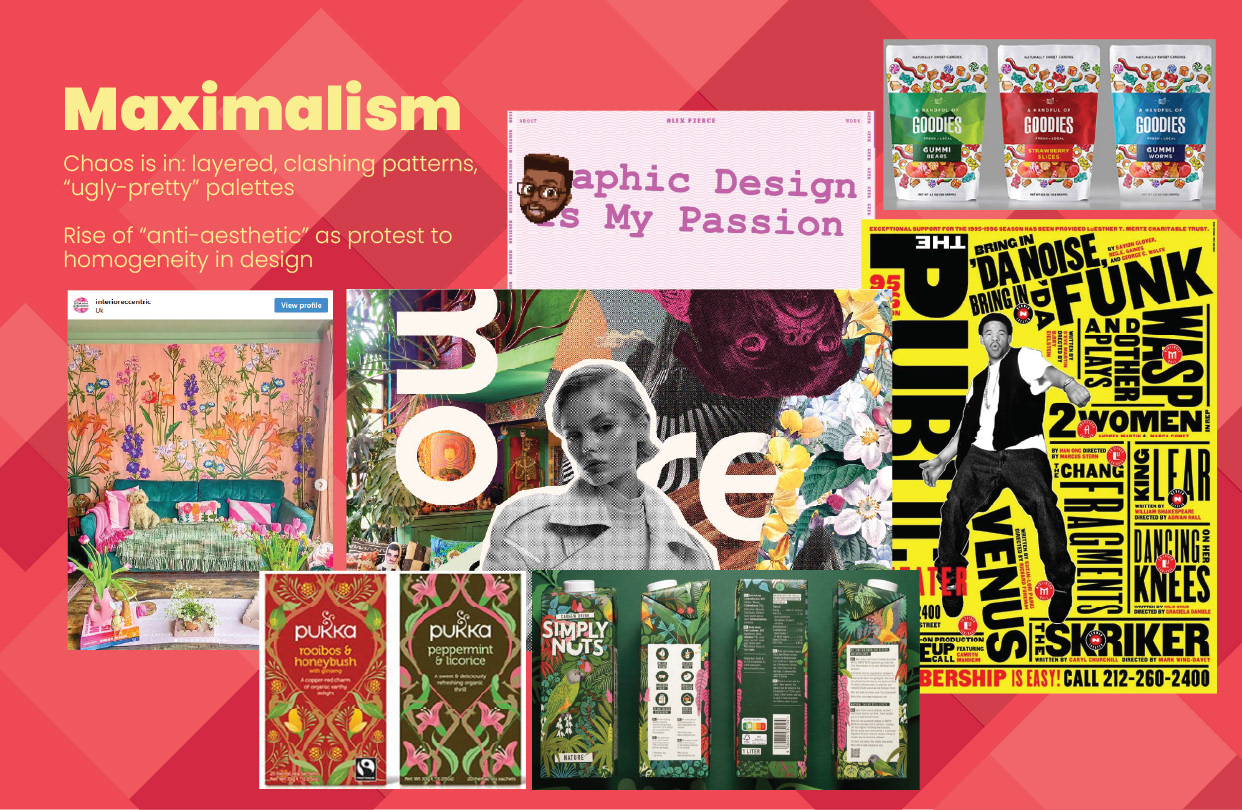
Maximalism — Embracing Visual Complexity  An exploration of maximalist design as a response to the prevalence of minimalism and standardized visual identities.  The presentation highlights layered compositions, clashing patterns, saturated colours, expressive typography and deliberately unconventional combinations.  This aesthetic embraces visual complexity, allowing brands to create distinctive personalities through abundance and experimentation.  The slide features a collage of richly decorated packaging, editorial layouts, posters and digital graphics.  Examples include densely layered typography, illustrated product packaging, vibrant floral patterns and intentionally chaotic compositions.  A bold coral-red background with geometric overlays reinforces the maximalist visual language.
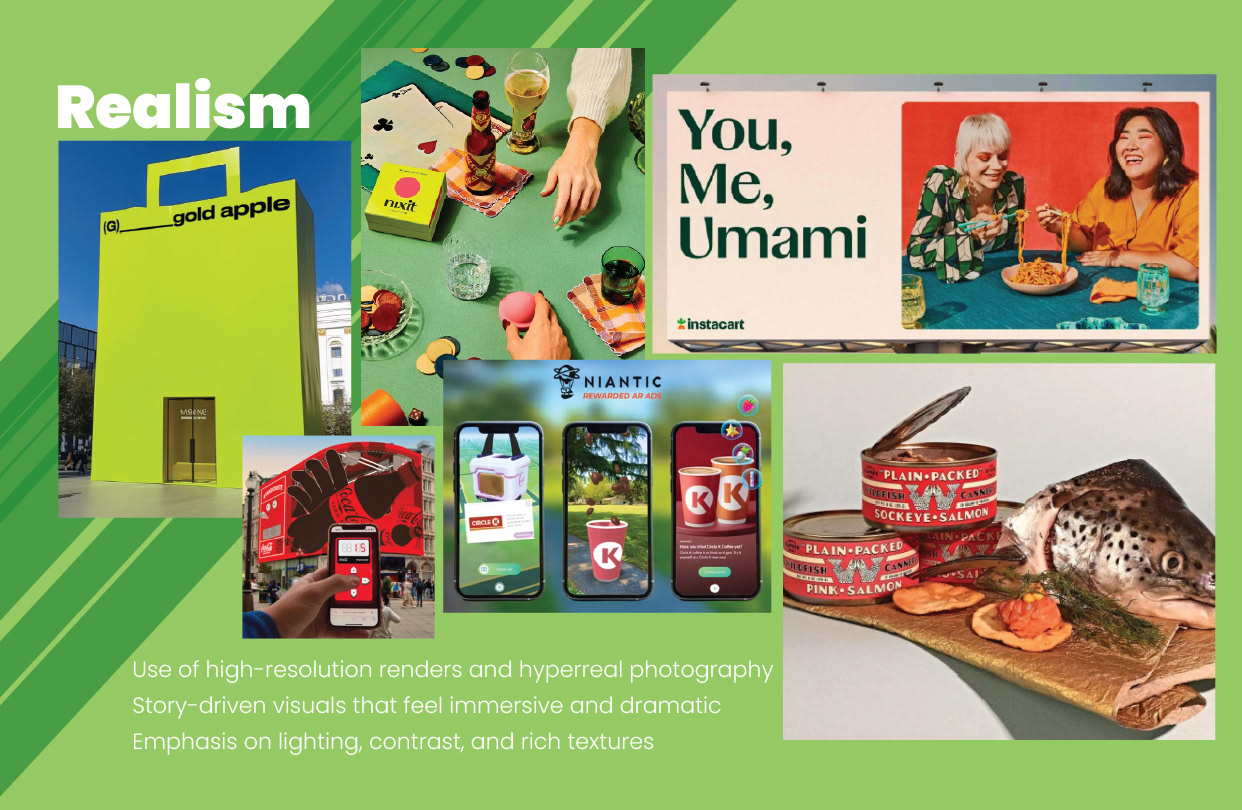
Realism — Immersive Photography and Hyperreal Rendering  An exploration of high-resolution photography, realistic rendering and immersive visual storytelling.  The presentation highlights the importance of detailed textures, dramatic lighting, contrast and carefully composed imagery in creating compelling brand experiences.  The slide features examples of commercial photography, product advertising, interactive digital experiences and photorealistic visual compositions.  These include food photography, large-scale advertising installations, augmented-reality applications and detailed product imagery.  A bright green background and angular graphic elements provide contrast to the realistic imagery.
Brand and Package Design — Evolving Visual Identities  Section divider introducing the presentation's examination of contemporary branding and packaging trends.  The slide features the heading "Brand & Package Design," establishing a transition into design approaches relevant to consumer packaged goods.  The following section explores simplicity, joyful imperfection and flexible design systems.
Simplicity — Minimalism with Impact  An exploration of minimalist branding and packaging that achieves visual impact through restraint.  The presentation highlights simplified brand identities, minimal typography, limited colour palettes and strong individual graphic elements.  Material considerations such as matte finishes, tactile printing techniques and sustainable packaging also contribute to the aesthetic.  The slide presents examples of minimal product packaging, including personal care products, cosmetics and contemporary brand identity systems.  The examples feature clean white backgrounds, restrained typography, geometric logos and carefully selected accent colours.  The overall composition emphasizes clarity, precision and visual simplicity.
Joyful Imperfection — Playful and Human-Centred Design  An exploration of design that embraces irregularity, hand-drawn illustration and playful visual expression.  The presentation examines how doodles, imperfect typography, analogue textures and intentionally unconventional graphics can create approachable brand personalities.  The slide features colourful packaging examples, including coffee, beverages, snack products and personal care items.  Hand-drawn characters, irregular lettering, illustrated patterns and bright colour combinations appear throughout the examples.  A vivid yellow background with expressive brushstroke textures reinforces the playful, imperfect aesthetic.
Flex Design Systems — Adaptive Brand Identities  An exploration of brand identities designed to evolve across different products, audiences, seasons and communication platforms.  The presentation examines adaptive branding, flexible packaging systems and dynamic visual identities that maintain recognition while allowing creative variation.  The slide features examples of product ranges and brand collaborations, including Oreo promotional packaging, illustrated beverage cans, coordinated product packaging and limited-edition designs.  The examples demonstrate how a consistent brand framework can support different colours, graphics, personalities and promotional executions.  A layered blue geometric background reinforces the idea of adaptable, modular visual systems.
Colour Trends — The 2025 Colour Landscape  Section divider introducing the presentation's exploration of contemporary colour trends.  The slide marks the transition into colour forecasting, including Pantone's Colour of the Year, emerging palette combinations and the emotional associations of colour in branding.
Pantone Colour of the Year — Mocha Mousse  An introduction to Pantone's 2025 Colour of the Year, PANTONE 17-1230 Mocha Mousse.  The warm brown shade is presented as a colour associated with comfort, richness and the familiar qualities of chocolate and coffee.  The slide features contemporary interior photography using warm wood tones, natural materials and muted neutral colours.  A large Pantone colour swatch identifies Mocha Mousse, while a supporting palette introduces complementary colours, including warm yellows, soft pinks, turquoise, purple and deeper earth tones.  The overall composition uses a muted brown background to reinforce the warmth and sophistication of the selected colour.
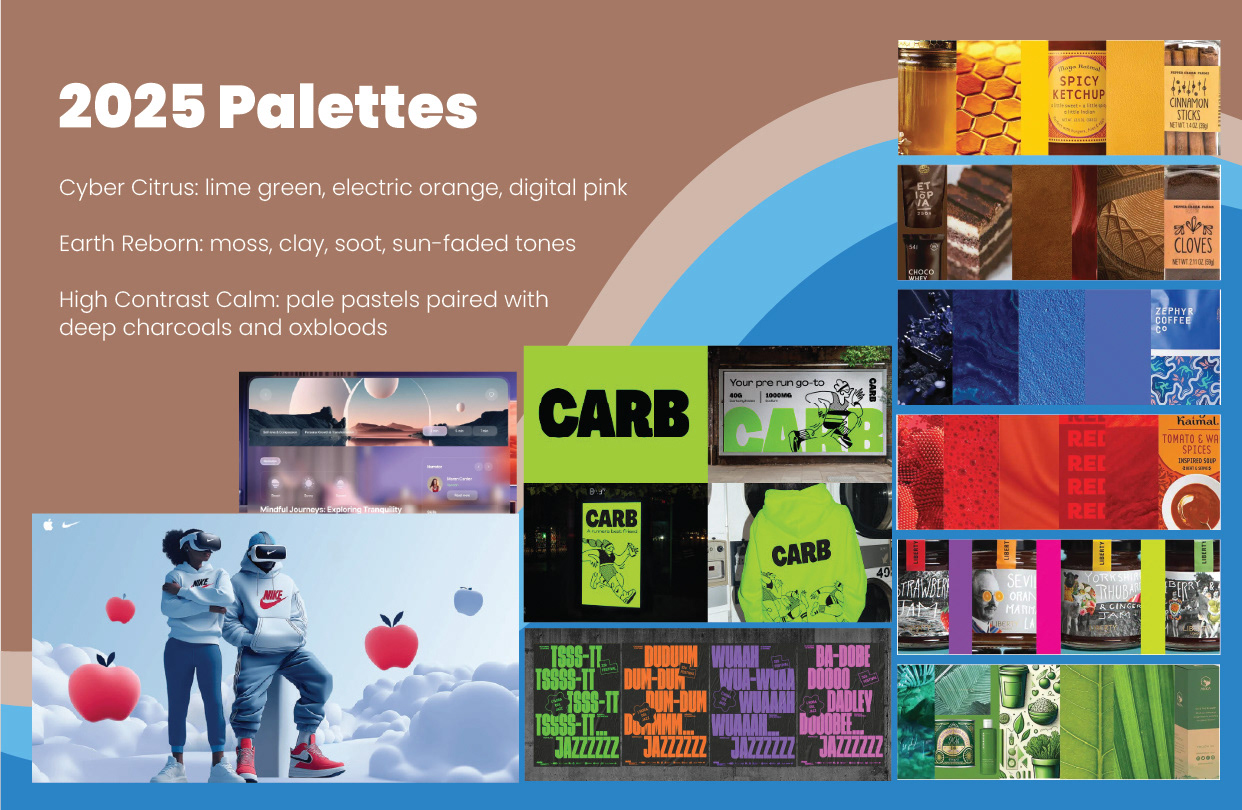
2025 Palettes — Emerging Colour Combinations  An exploration of three colour directions identified for 2025.  Cyber Citrus combines lime green, electric orange and digital pink to create energetic, technology-inspired palettes.  Earth Reborn emphasizes moss green, clay, soot and sun-faded tones, reflecting natural materials and grounded visual expressions.  High Contrast Calm combines pale pastels with deep charcoal and oxblood tones, balancing softness with dramatic contrast.  The slide presents a collage of packaging, advertising and visual identity examples demonstrating these colour approaches.  Bright neon graphics, earthy product packaging, saturated editorial layouts and soft digital imagery illustrate the range of contemporary colour combinations.
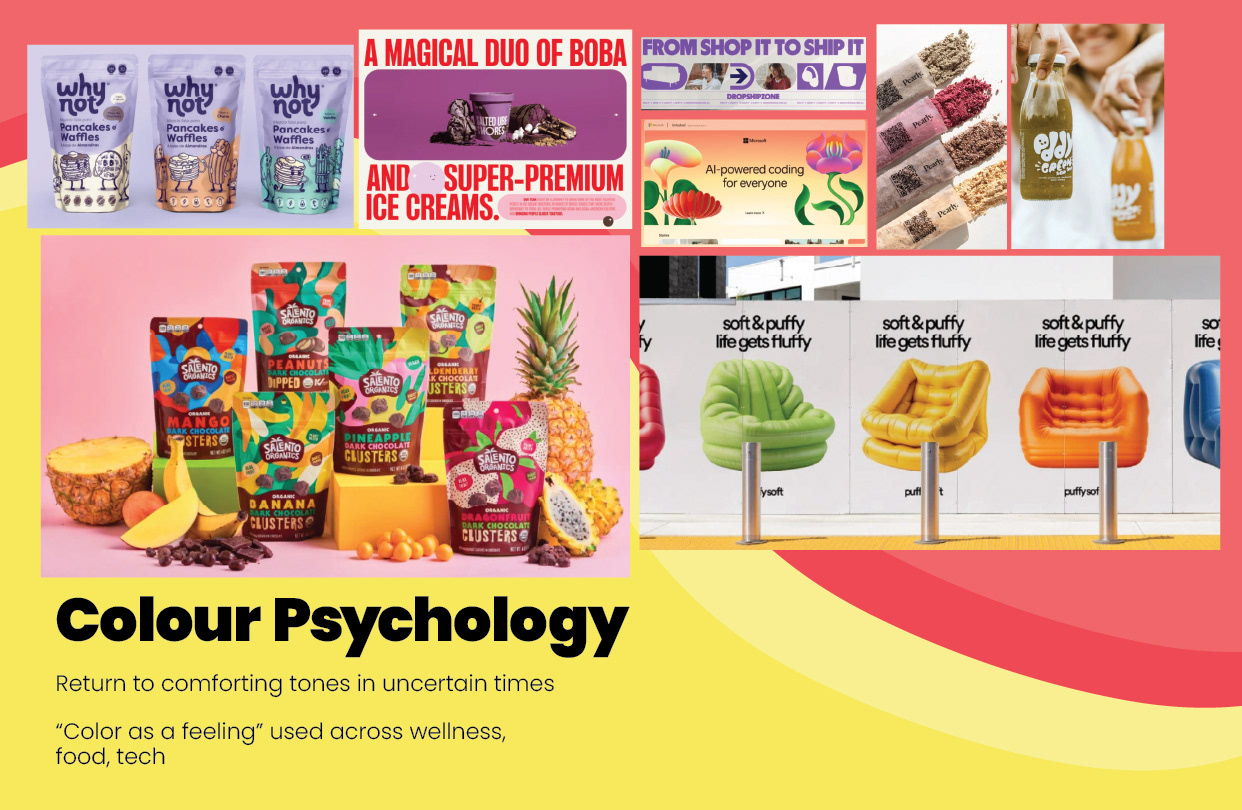
Colour Psychology — Designing for Emotion  An exploration of how colour influences emotional perception and consumer responses to brand communication.  The presentation examines the return of comforting tones during uncertain periods and the use of colour to communicate feelings across wellness, food and technology.  The slide features colourful consumer product packaging, food advertising and retail displays.  Examples include pastel beverage packaging, brightly coloured snack products, ice cream advertising and sculptural seating in green, yellow and orange.  A layered pink and yellow background reinforces the expressive use of colour throughout the examples.
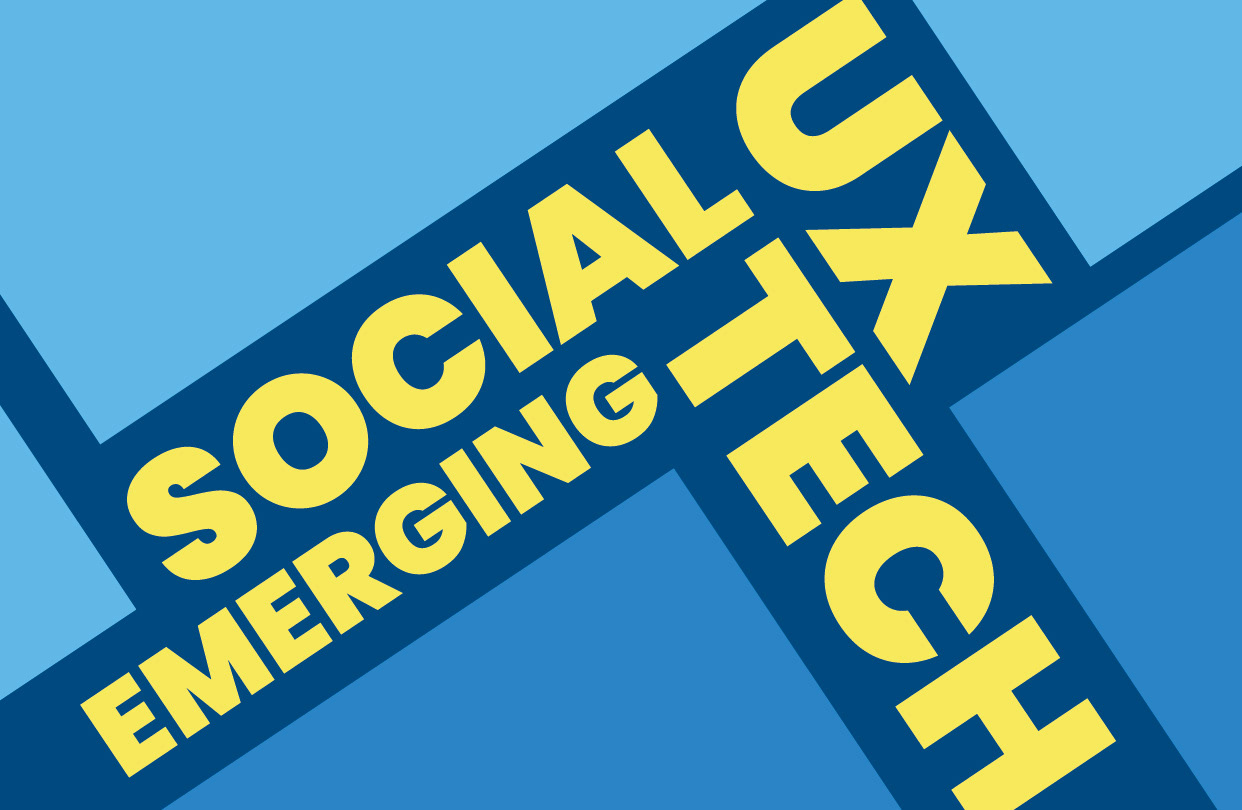
User Experience — Emerging Interaction Design  Section divider introducing the presentation's exploration of evolving user experiences and interaction design.  The slide uses large, fragmented typography to introduce the UX section, transitioning from visual branding and colour trends into the ways consumers interact with digital and physical environments.  The following section examines voice and gesture interfaces, inclusive design and immersive experiences.
Voice and Gesture, Ethical Design, and Immersive Experiences  An exploration of three developments influencing user experience design.  Voice and Gesture: Digital interactions are moving beyond traditional screens toward voice commands, gesture controls and spatial interfaces. The presentation highlights augmented reality overlays and ambient digital environments.  Ethical and Inclusive: Accessibility is positioned as a fundamental design requirement rather than an afterthought, alongside gender-neutral interfaces, inclusive communication and alternative text as a creative consideration.  Immersive Experiences: Brands are increasingly combining physical and digital environments through augmented reality packaging, digital twins and interactive activations.  The slide features three supporting images: a futuristic spatial interface with a translucent human figure, a collection of colourful beverage advertisements featuring different people, and an immersive projection environment filled with visitors.  A coral-red background unifies the three topics.
Consumer and Cultural Shifts — Changing Expectations  Section divider introducing the cultural behaviours and consumer expectations influencing design in 2025.  The slide features oversized yellow typography reading "Consumer & Cultural Shifts" against a layered green geometric background.  The word "Shifts" is rendered in large expressive script, contrasting with the bold condensed lettering above it.  The following section examines attention scarcity, trust and transparency, and participatory brand experiences.
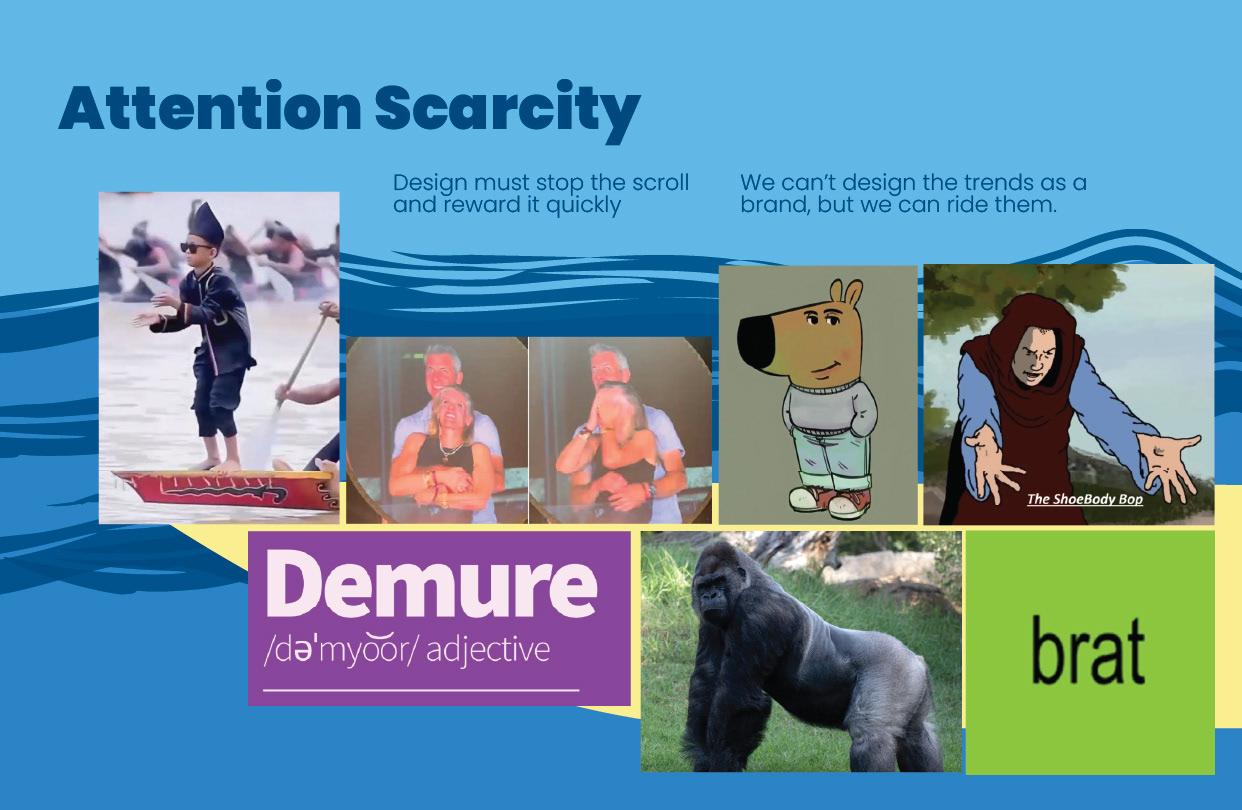
Attention Scarcity — Designing for a Shorter Attention Span  An exploration of how brands compete for attention in increasingly crowded digital environments.  The presentation emphasizes the importance of creative that quickly captures interest and delivers an immediate reward to viewers.  Rather than attempting to manufacture cultural trends, brands can respond to existing movements and participate in relevant conversations.  The slide features a collage of internet memes, viral social media references and contemporary pop culture imagery.  Examples include the "Demure" trend, the "Brat" aesthetic, animated internet characters and other viral visual references.  A bright blue background with flowing graphic elements reinforces the fast-moving nature of digital culture.
Trust and Transparency — Authenticity in Brand Communication  An exploration of the growing preference for raw, unfiltered and less polished visual communication.  The presentation examines how analogue textures, handmade illustrations, imperfect typography and straightforward visual storytelling can help brands communicate authenticity.  The slide features examples of rustic brand identities, hand-lettered signage, illustrated logos and traditional packaging.  Examples include coffee shop branding, food packaging, craft beverage labels and woodcut-inspired illustrations.  A warm yellow, orange and coral background complements the handcrafted aesthetic of the examples.
Empowerment Aesthetics — Community-Driven Creativity  An exploration of how brands can invite consumers and communities to participate directly in creative development.  The presentation highlights participatory campaigns, fan-designed products and collaborative brand experiences that give audiences greater creative ownership.  The slide features examples of community-driven branding and consumer participation, including LEGO's customizable building experiences, Chobani's consumer storytelling initiatives, Lush products and Wonder packaging featuring expressive artwork.  A large illustrated Wonder graphic occupies the right side of the slide, reinforcing the potential for consumer-created artwork within established brand systems.  The green background supports the theme of creativity, collaboration and community engagement.
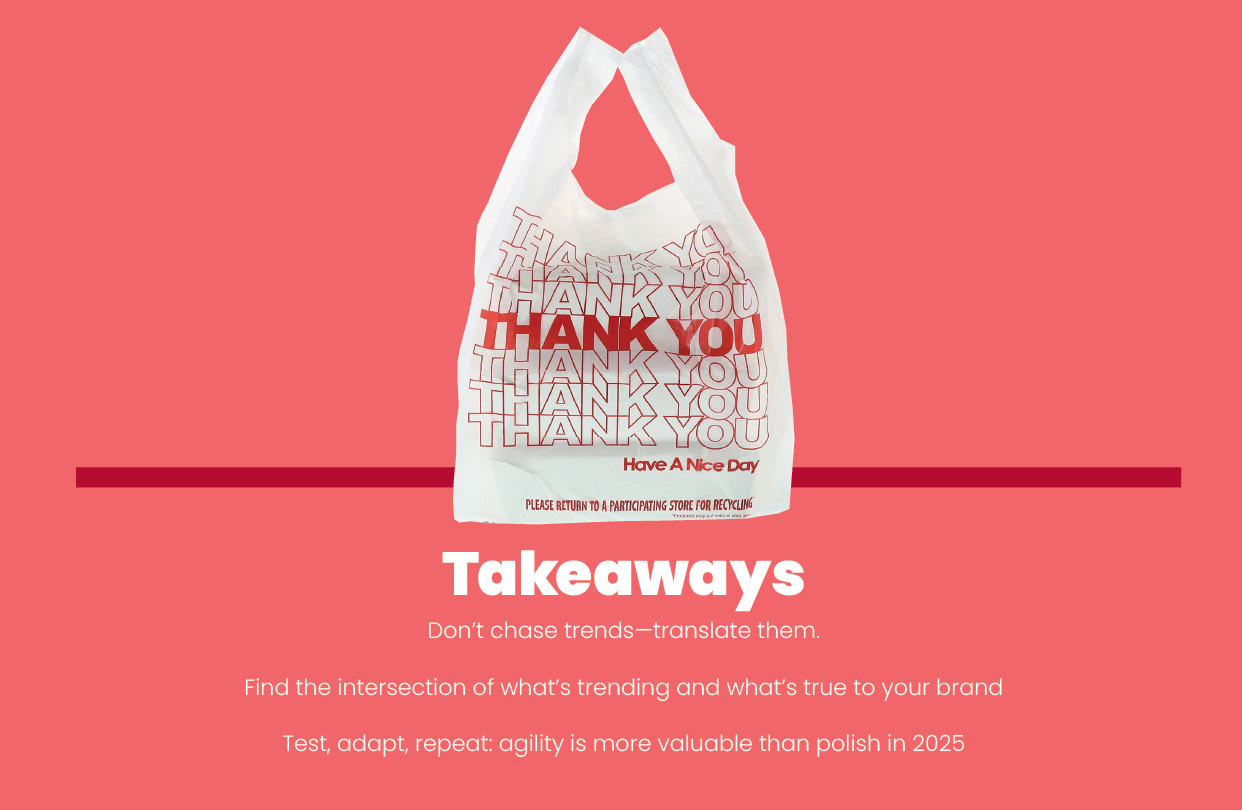
Takeaways — Translating Trends into Brand-Relevant Design  The presentation concludes with three guiding principles for applying emerging design trends.  First, designers should translate trends rather than simply imitate them, adapting new visual approaches to suit a brand's established identity.  Second, successful creative work should identify the intersection between cultural relevance and authentic brand expression.  Third, experimentation and adaptability are emphasized as essential qualities in contemporary design, with an iterative approach often proving more valuable than pursuing perfection from the outset.  The slide features a white shopping bag with repeated red "Thank You" typography, presented against a coral-pink background.  The central takeaway is summarized in the statement: "Don't chase trends—translate them."
Q&A — Applying Design Trends to Our Work  Closing discussion slide inviting the Bakehaus team to reflect on the trends presented and consider their practical applications.  The slide poses three questions: Which trends are resonating with the team? How can these trends be applied within the company's specific product categories? And which creative approaches should be explored first?  The presentation concludes by encouraging discussion, experimentation and the thoughtful application of emerging design trends to future creative projects.

You may also like

Baked In Store - Packaging Production Art
2019
Weston Foods NRA Booth
2018
Indulgent Pies Packaging Design
2023
Back to School 2025 In Store Campaign
2026
Mie et Cie Brand Creation
2026
DeFranco Care Package
2018
ACE Biscuits Corrugate Display
2019
ACE Coupons
2018
Signage
2018
Bold and Vibrant Tortilla Flavors for Casa Mendosa
2023
↑Back to Top
Powered by Adobe Portfolio